
Blue Spaces, Calm Minds, Better Sleep: The Science of Designing a Bedroom for Rest
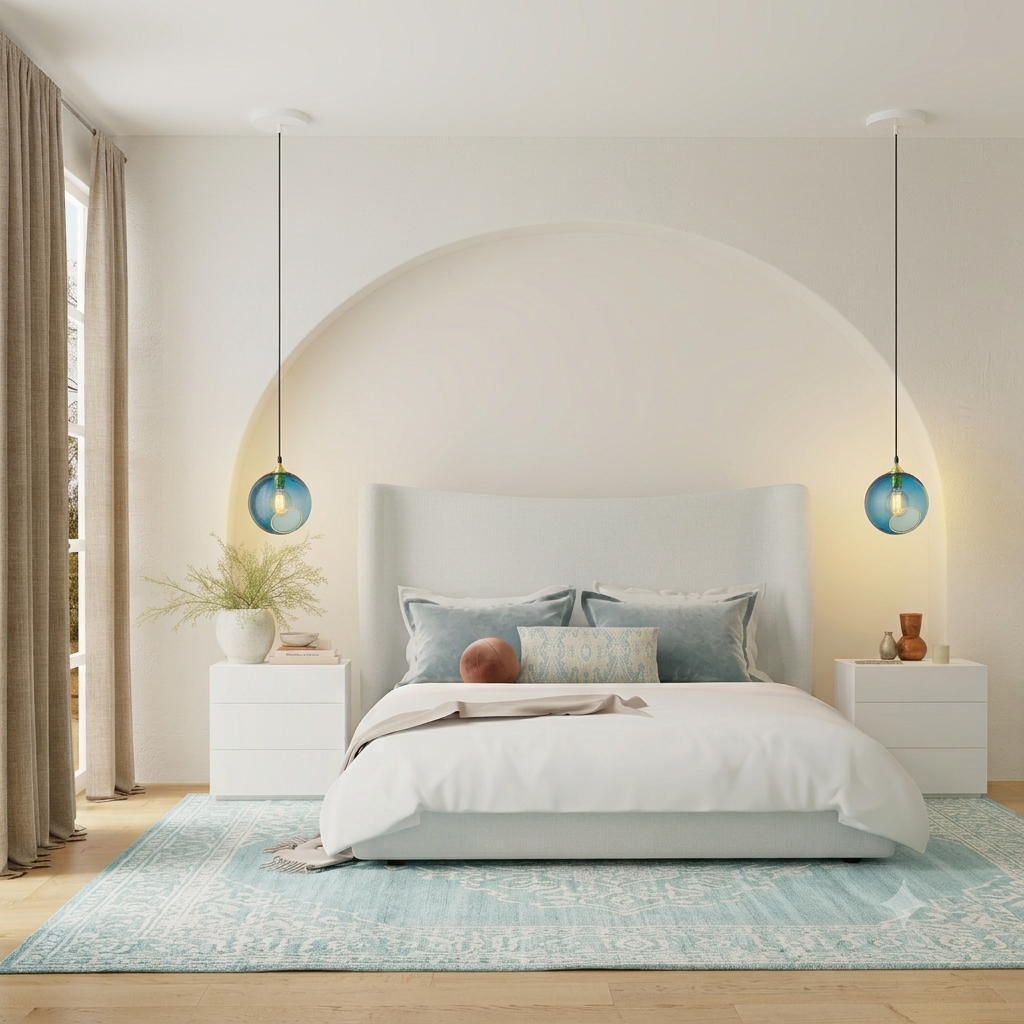
Serene bedroom featuring the Rowe Bed, Ballroom pendant Blue, Blanche nightstands- marie burgos collection
Quick answer: Blue is the most effective bedroom color for promoting sleep because it activates the parasympathetic nervous system, lowering cortisol and heart rate. When paired with warm lighting, natural textiles, and grounding metallic accents, a blue bedroom becomes a full sensory sanctuary rather than a cold, clinical space.
In 2026, the bedroom has shifted from an afterthought to a wellness investment — a room designed with the same intention as a spa or meditation studio. At the center of this shift is one simple, science-backed decision: color.

Light blue living room with MORITZ sectional sofa, Poppy coffee table - Marie burgos collection
Why Blue Is the Color of Rest
Neuroscience confirms what designers have long understood instinctively: cool tones, particularly blue, signal safety to the brain. Exposure to blue hues has been linked to a measurable calming response in the nervous system — heart rate slows, cortisol drops, and the body begins the physiological shift from alert to rest.
This is why blue shows up again and again in spaces designed for deep relaxation: spas, meditation rooms, and now, the modern luxury bedroom.
Key takeaway: Blue doesn't just look calming — it changes how your body feels in the room.
The Nuance Most Designs Miss
Not all blue is created equal. Choose the wrong shade and a "calming" bedroom can tip into cold or sterile territory. The goal is a blue that feels inviting and grounded, not clinical. That distinction — precision over palette — is what separates a designed sanctuary from a room that simply happens to be blue.
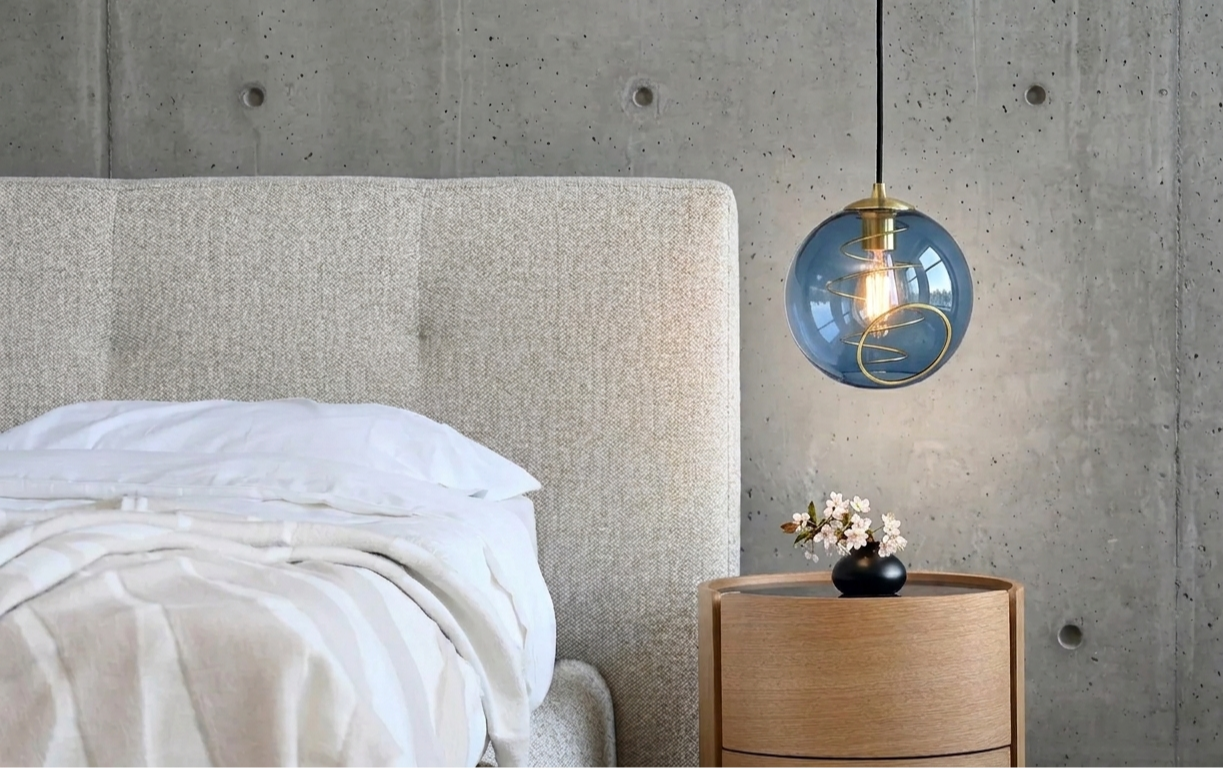
Bedroom detail with Ballroom Light pendant blue, Burrow nightstand - marie burgos collection.png
Building the Blue Sanctuary: A Room-by-Room Approach
1. Start With a Foundation Bed
Every calming bedroom needs an anchor, and nothing anchors a room like the bed itself.
The Rowe Bed, with its blind-tufted headboard, creates visual softness paired with refined comfort
The Plume Bed, with its two extra-large pillow headboard, envelops you in a sense of luxury and rest
Either piece sets the tone for the entire room before a single accessory is added.
2. Layer Color and Texture
Navy & Blue Pillows in varying shades build depth and prevent the palette from feeling flat
Cream or soft white throws in natural fibers add warmth — this is what keeps a blue room from tipping into sterile territory
The Burrow Nightstand, with its minimal, circular design, keeps surfaces clear. Clutter impedes rest; simplicity invites surrender.
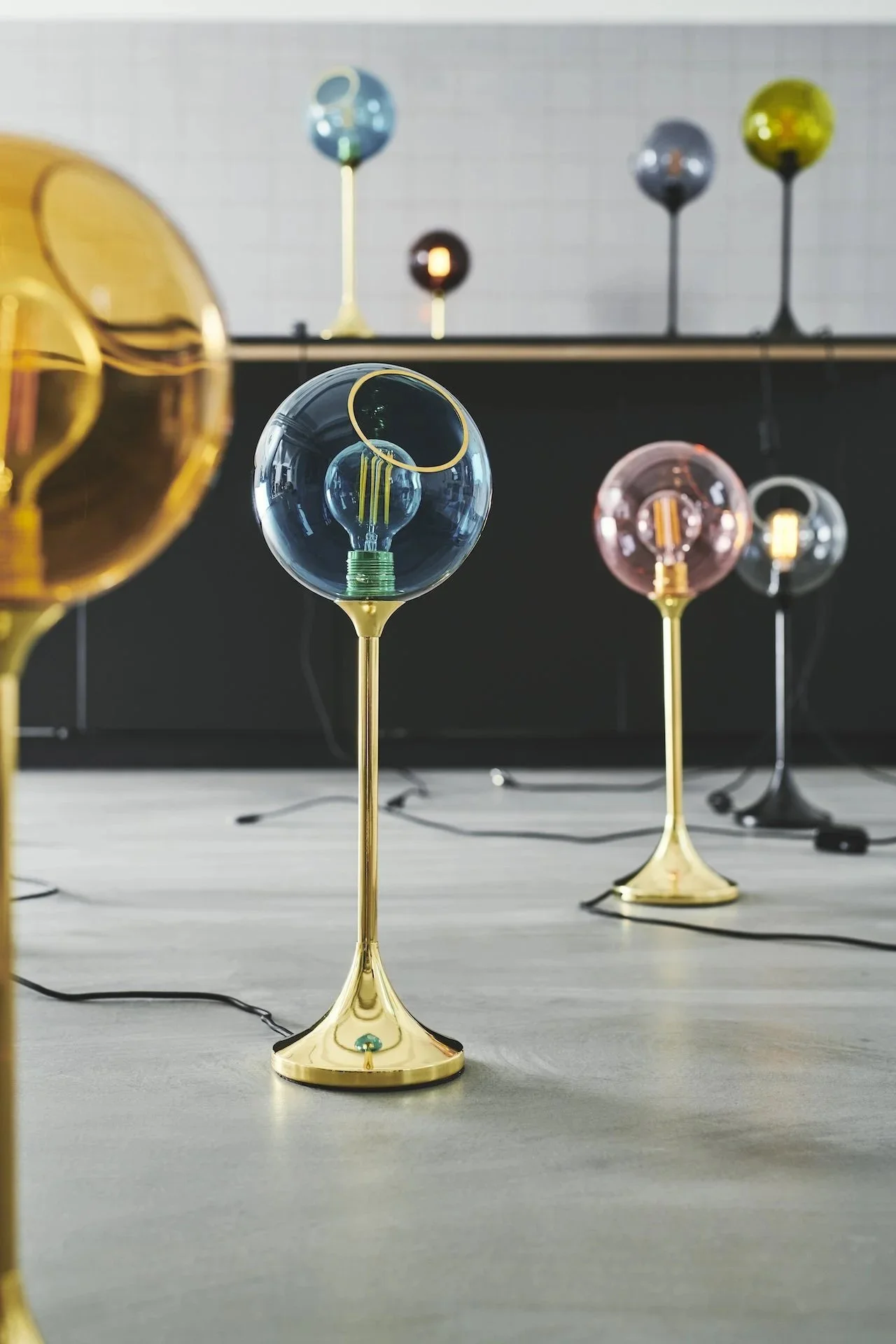
Marie_Burgos_Collection_Ballroom_ table Lamps.
3. Get the Lighting Right
Lighting is arguably more important than paint color when it comes to sleep quality. Harsh white light works against everything a blue palette is trying to achieve.
Use 2700K warm LEDs that diffuse gently — never harsh or cool-toned bulbs
The Ballroom Table Lamp on the nightstand adds sculptural, diffused light exactly where it's needed most — soft enough for reading, warm enough to wind down by
Introduce candlelight in the evening hours to cue the body toward sleep
4. Layer the Sensory Details
A true sanctuary engages more than sight.
Calebasse Candles or Sweetsop, in subtle, non-competing tones, support the mood rather than override it
Soft textiles everywhere — on the bed, the nightstand, underfoot — turn the room into an invitation to linger

Blue Hotel bedroom featuring Plume bed, , Ballroom pendant light - marie burgos collection
The Philosophy Behind the Palette: Holistic Luxury
A bedroom designed for calm isn't a luxury add-on — it's a form of preventative wellness. When the bedroom supports genuine rest, the effects ripple outward: sharper mood, better clarity, more resilience, and a steadier sense of presence throughout the day.
This is the core of Holistic Luxury — a design philosophy where beauty and biology work together, and every material, color, and light source is chosen with the nervous system in mind, not just the eye.
FAQ: Blue Bedrooms and Sleep
Does blue really help you sleep better? Yes. Blue tones are associated with parasympathetic nervous system activation, which lowers cortisol and heart rate — both of which support the transition into restful sleep.
What shade of blue is best for a bedroom? Muted, grounded blues — like ocean or deep cool velvet tones — tend to feel calming rather than cold. Avoid overly bright or icy blues, which can read as clinical.
How do I keep a blue bedroom from feeling cold? Balance cool blue tones with warm elements: cream textiles, gold or bronze accents, warm 2700K lighting, and natural fiber throws.
Is lighting really that important in a calming bedroom? Yes — lighting temperature affects circadian rhythm as much as color does. Warm, diffused light supports the body's natural wind-down process; harsh white light disrupts it.
Bring the Blue Sanctuary Home
A bedroom built for rest is one of the highest-return investments in your home — not in resale value, but in how you feel every single day.
— The Marie Burgos Collection Team